For about two weeks, students in the Albanian capital, Tirana, have been demonstrating daily against the government. Prime Minister Edi Rama has once again called on the protesting students for dialogue. In a video posted on his Instagram profile on Tuesday, the head of government is seen arranging several red chairs in a circle in front of his official residence and placing signs with the word "Dialogue" on them. According to local media, the students then removed the chairs and replaced them with images of police operations in recent days.
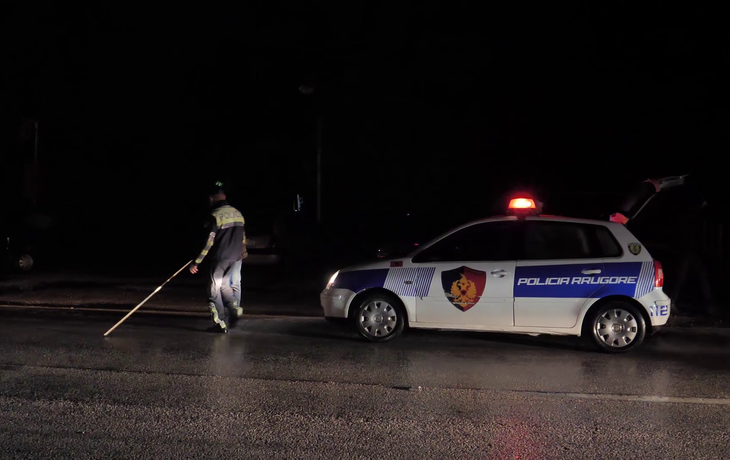
The demonstrations have repeatedly ended in violent clashes between protesters and security forces. For the coming weekend, government critics are calling for the siege and isolation of state institutions, major transportation routes, and the parliament building. Moreover, the demonstrations are no longer limited to Tirana. Protesters are increasingly organizing in other Albanian cities such as Durrës, Shkodra, and Korça, prompting security forces across the country to brace for serious unrest.
For more than five months, demonstrations have been taking place in Albania. The cause was a luxury tourism project in a nature reserve on the southern Adriatic coast, linked to an investment firm owned by Jared Kushner, son-in-law of US President Donald Trump. The protests became known as the Flamingo Movement.
Professors and doctors behind the student movement
But the latest movement only began on October 13. In the courtyard of the Ministry of Education, students burned a suitcase to protest against the lack of future prospects and poor educational opportunities. Many young people are already leaving for professional training abroad because domestic universities are dilapidated and tuition fees are high. Employers in Albania complain that they cannot find qualified workers because higher education institutions do not offer practical training and there is no vocational education system. Youth unemployment is 25%.
Young people often have only two choices: either live permanently with their parents or leave the country. Those who stay often work in poorly paid seasonal jobs in the tourism sector. Students are demanding lower tuition fees, more government investment in schools and universities, and an end to corruption in the education system.
-

British media: Revolution arrives in Albania
October 23, 22:32
What began as a student protest is now increasingly turning into a broad civic movement. On Friday, doctors began a protest march to the Prime Minister's office to express their support for the demonstrations.
In a joint manifesto published on Tuesday, more than 900 teachers and professors actively sided with the students. They also demanded the immediate resignation of Prime Minister Edi Rama and the appointment of a neutral transitional government to reduce tensions in the country. Their appeal also called on police and demonstrators to refrain from using violence.
Aspirations for EU membership without Rama
Prime Minister Edi Rama, who has governed the country for 13 years, holds an absolute majority in parliament and will remain in office until 2029. He has so far shown no willingness to resign. In another video released Tuesday evening, he addressed the nation from his office shortly after demonstrators had thrown down chairs he had secured in front of the government building earlier that afternoon. In the video, he portrays himself as the sole stable guarantor of negotiations with Brussels and describes the unrest as a threat to EU policies.
The civilian population sees things differently: according to a survey by the Regional Cooperation Council, 86% of people in Albania support EU membership and 90% trust the EU in general. The demonstrators make it clear that they want to join the EU, but without Rama, and also not with the current opposition in parliament. This opposition also faces a major credibility problem after several corruption scandals. The civic movement is seeking an alternative to the political establishment and is also keeping an eye on the elections in Serbia on Sunday. There, a student list could potentially hinder Aleksandar Vučić’s bid for re-election as president.
Erdogan and Vucic after Rama
However, the Serbian president praised Rama on Thursday as "one of Albania's greatest assets." After Albanian police used tear gas, water cannons and batons against students for days, Vučić said on Wednesday that Rama had not acted harshly enough. He had wasted time trying to calm the demonstrators. Vučić warned Rama that early elections could cost him power.
Rama is also receiving support from the Turkish leader. On Monday, Recep Tayyip Erdogan sent him a message of support: A Turkish military plane brought some new water cannons to Tirana. ©Albanian adaptation LAPSI.al