Israel is voting in one of the most decisive elections in its history, with the highest voter turnout in more than four decades.
By noon, about 31.5% of eligible voters had voted, the highest level recorded at this time in Israeli elections since the 1970s. In 2022, when Benjamin Netanyahu returned to power, turnout by 12:00 was 28.4%.
Polls show a close race between Prime Minister Benjamin Netanyahu and former army chief Gadi Eisenkot. However, neither political bloc is expected to secure the 61 seats needed to form a government, which could plunge the country into a new political crisis.
The campaign has been dominated by issues of security and democracy, with the election widely seen as a referendum on Netanyahu's rule.
The process has also been accompanied by accusations of irregularities, but the Central Election Commission states that there is no evidence of systematic manipulation.
Netanyahu faces united opposition
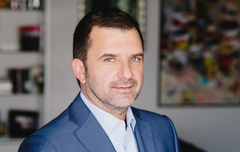
Eisenkot, leader of the new Yashar party, leads the so-called "change bloc", an alliance of forces with different political persuasions, but with a common objective, the removal of Netanyahu from power.
This bloc also includes former Prime Minister Naftali Bennett, right-wing politician Avigdor Lieberman, and former left-wing general Yair Golan.
On the other hand, Netanyahu, who first became prime minister in 1996, aims to maintain power through an alliance with far-right and ultra-Orthodox parties.
Two blocs of Arab parties are also in the race, which could play a decisive role in forming the government, although most Jewish parties have ruled out cooperating with them.
Historic turnout, but risk of political deadlock
About 70,000 Israelis are reported to have returned from abroad to vote, while hundreds of thousands of citizens are participating in the elections for the first time.
The first exit polls will be published on Tuesday at 10:00 PM, while a portion of the votes of soldiers and reservists will only be counted on Wednesday.
If no bloc secures a majority and the formation of a minority government fails, Israel could go to elections again, with Netanyahu continuing as incumbent prime minister.
Such a scenario would bring back the political crisis of 2019–2022, when Israel held five parliamentary elections.
The October 7 attacks and the accusations against Netanyahu
Security has been a major campaign theme. The opposition accuses Netanyahu of a security failure that allowed Hamas to carry out attacks on October 7, in which some 1,200 people were killed and 251 others were taken hostage.
Opponents are calling for an independent investigative commission, while Netanyahu opposes it, claiming the investigation would be biased.
The opposition has also raised concerns about democracy, citing the ongoing trial of the prime minister for corruption and the controversial judicial reform, which has sparked mass protests.
Netanyahu denies the charges and continues to present himself as the guarantor of Israel's security, highlighting military successes and a close relationship with US President Donald Trump.
In the final days of the campaign, Channel 12 and CNN reported that Netanyahu had sought new military action against Iran, but had faced opposition from Israeli military leaders and Trump. The prime minister denied the reports.
He also released an artificial intelligence-generated image of a nuclear bomb hitting Tel Aviv to warn of the Iranian threat. Eisenkot called his reaction “ hysterical .”
Another divisive issue is the military conscription of ultra-Orthodox Jews, whom the government has not forced to serve, despite a Supreme Court ruling.
Gaza and Palestine: Limited differences between rivals
Despite their political rivalry, Eisenkot and Netanyahu have similar positions on Gaza.
Eisenkot has promised to end Hamas rule within 18 months, through a US-led peace plan or, if necessary, by military intervention.
Israel has continued to carry out almost daily attacks on Gaza despite a ceasefire reached last year. According to the Gaza Health Ministry, more than 74,000 Palestinians have been killed since the war began.
Eisenkot broadly supports Israeli settlements in the occupied West Bank but calls for measures against extremist settlers. He has spoken of the possibility of Palestinian autonomy under ultimate security control by Israel.
Meanwhile, the two-state solution, which envisions the creation of an independent Palestinian state alongside Israel, has almost disappeared from the mainstream Israeli political debate. /BBC, prepared in Albanian ©LAPSI.AL